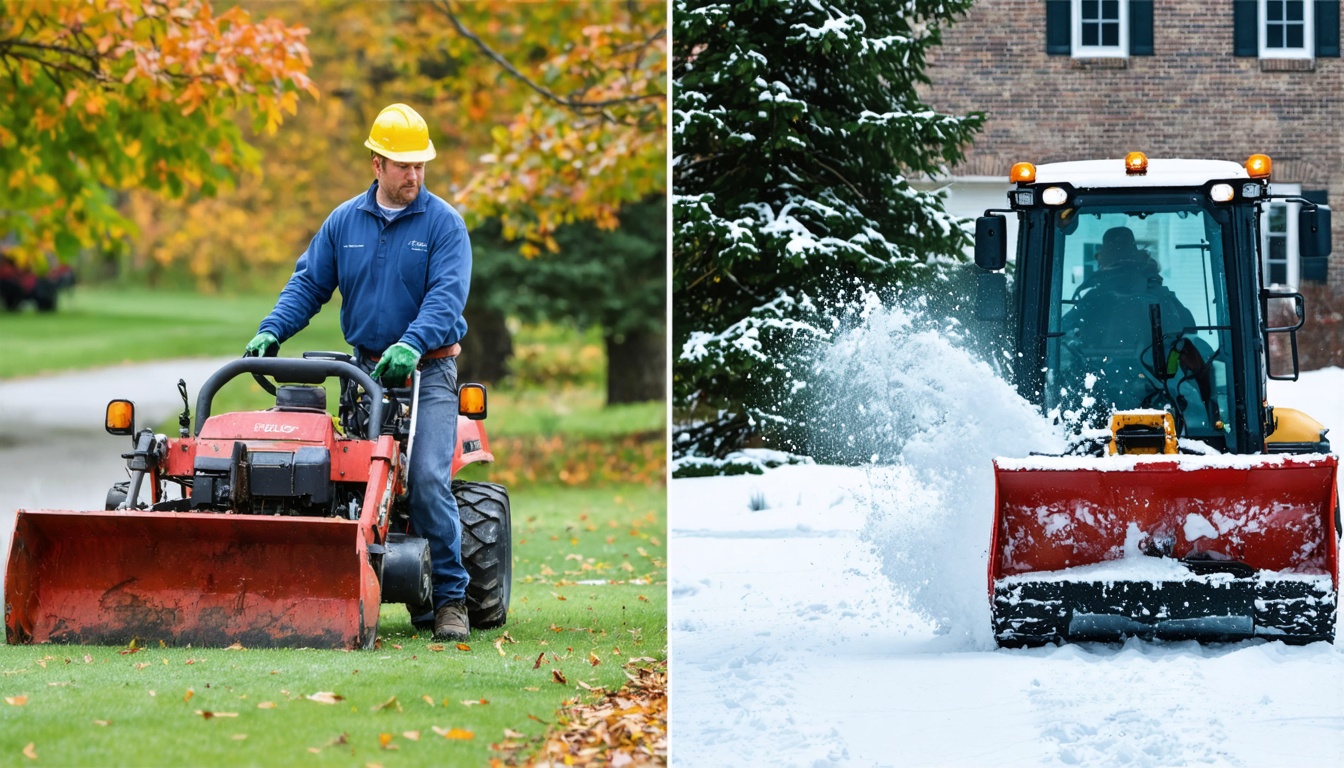
If you run a seasonal business—landscaping, snow removal, construction, agricultural operations, outdoor events—you know the cycle intimately. Revenue flows during the busy season, and the lean months require careful cash management to bridge the gap. What many seasonal business owners haven’t fully considered is how equipment financing strategy can dramatically change that equation.
The Seasonal Cash Flow Problem
The challenge is straightforward: your most significant equipment needs—replacement, upgrades, additions to handle a larger contract—typically arise at the moments when your cash position is most constrained. A landscaping company that had a strong summer may want to invest in additional equipment before spring to take on more accounts. But the cash from last summer has been consumed by winter overhead, and the new season’s revenue hasn’t started yet. A snow removal contractor gets a large new commercial account in October—right before the season starts—and needs additional equipment immediately.
Traditional bank financing was not designed with these dynamics in mind. Banks want to see predictable, stable revenue streams. Seasonal businesses, by their nature, don’t have that. They have strong revenue during one part of the year and dramatically reduced revenue during another. This makes them higher-risk in traditional lending models, which is why so many seasonal business owners have difficulty accessing the equipment financing they need through conventional channels.
Financing Structures for Seasonal Businesses
Equipment financing specialists understand that seasonal businesses need seasonal solutions. Several financing structures are particularly well-suited to businesses with cyclical revenue:
Seasonal Payment Structures. Rather than fixed monthly payments regardless of the season, some equipment financing arrangements can be structured with higher payments during peak revenue months and reduced or deferred payments during the off-season. This aligns your financing cost with your revenue generation, dramatically improving cash flow management through the year.
Short-Term Lease Arrangements. For equipment that is genuinely needed only seasonally—snow pushers, specialized harvesting equipment, event production equipment—short-term lease arrangements allow you to have the equipment when you need it without carrying the cost when you don’t. This is particularly powerful for expensive specialty equipment that would otherwise sit idle for six months of the year.
Sale-Leaseback Transactions. If you own equipment outright, a sale-leaseback can provide a substantial cash injection during the off-season—precisely when you need it most. You sell the equipment to a financing company and immediately lease it back, continuing to use it exactly as before. The proceeds from the sale go directly into your operating account, giving you the capital to cover winter overhead, make investments ahead of the next season, or take advantage of opportunities that arise during the slow period.
Revolving Equipment Lines. For businesses that regularly need to add or replace equipment as their seasonal portfolio shifts, revolving equipment lines of credit allow you to access financing as needed and pay down as revenue comes in. This provides maximum flexibility for operations that are constantly adjusting their equipment mix.
Case Study: A Landscaping Company’s Off-Season Challenge
Consider a commercial landscaping operation with 15 regular business accounts and a strong summer revenue base. The business owns several mowers, trucks, and trailers outright—assets acquired over years of operation. Every winter, the owner faces the same problem: revenue drops to near zero, but fixed costs—insurance, storage, equipment maintenance, the core team—continue. The temptation is to borrow against the business line of credit, which has consequences for future borrowing capacity.
A sale-leaseback on two of the larger mowers—assets worth a combined $85,000—generates an immediate cash injection that covers winter operating costs comfortably. The owner continues using both mowers throughout the following season exactly as before. The monthly lease payment is modest compared to the cash reserve she now has available. When spring comes and a large new commercial account requires additional equipment, she has the working capital to acquire it—either through additional financing or from her now-healthy cash position.
More importantly, she comes into the spring season from a position of strength rather than financial stress. That difference affects every business decision she makes: whether to take on a borderline account, whether to invest in additional marketing, whether to bid aggressively on a large contract. Financial breathing room is a competitive advantage.
Pre-Season Equipment Planning
One of the most important—and most overlooked—applications of equipment financing for seasonal businesses is pre-season acquisition planning. Rather than waiting until you need equipment and then scrambling to finance it under time pressure, strategic seasonal businesses plan their equipment needs 90 to 120 days before the season begins and arrange financing during the slow period.
This approach has several advantages. First, it removes the time pressure from the financing process—you can evaluate multiple lenders, negotiate better terms, and ensure the deal is structured optimally rather than accepting the first offer available because the season starts next week. Second, it allows you to acquire used equipment at off-season auction prices, which are typically 15 to 25 percent below peak-season values for categories like landscaping and construction equipment. Third, it gives you certainty heading into the season—you know what equipment you’ll have, what your costs will be, and how to price your services accordingly.
Agricultural Applications
Agricultural operations represent perhaps the most extreme case of seasonal cash flow dynamics. Revenue is concentrated around harvest, while equipment costs, operating expenses, and debt service continue year-round. For farming operations looking to add or replace major equipment—irrigation systems, tractors, harvesting equipment—financing structures that account for the seasonal revenue pattern can make the difference between viable and unmanageable.
Agricultural equipment financing often incorporates harvest deferral features, allowing principal payments to be delayed until after the season’s revenue has been received. This protects cash flow during the most vulnerable periods of the agricultural cycle while still allowing the operation to access the equipment it needs to maximize yield and efficiency.
The SPS Approach to Seasonal Financing
Standard Professional Services has extensive experience working with seasonal businesses across industries. We understand that your cash flow doesn’t fit a standard amortization schedule, and we structure financing arrangements that reflect the actual rhythm of your business rather than forcing you into a one-size-fits-all solution.
Whether you need pre-season acquisition financing, off-season cash flow support through a sale-leaseback, or a flexible line that lets you adjust your equipment mix as your seasonal needs change, we can design a solution that works. Contact us to discuss your seasonal equipment financing needs.